FREE RESOURCES
Our resources are thoughtfully created using evidence-based approaches, clinical expertise, and practical strategies that come from working with families every day.
Speech & Language Focused Resources
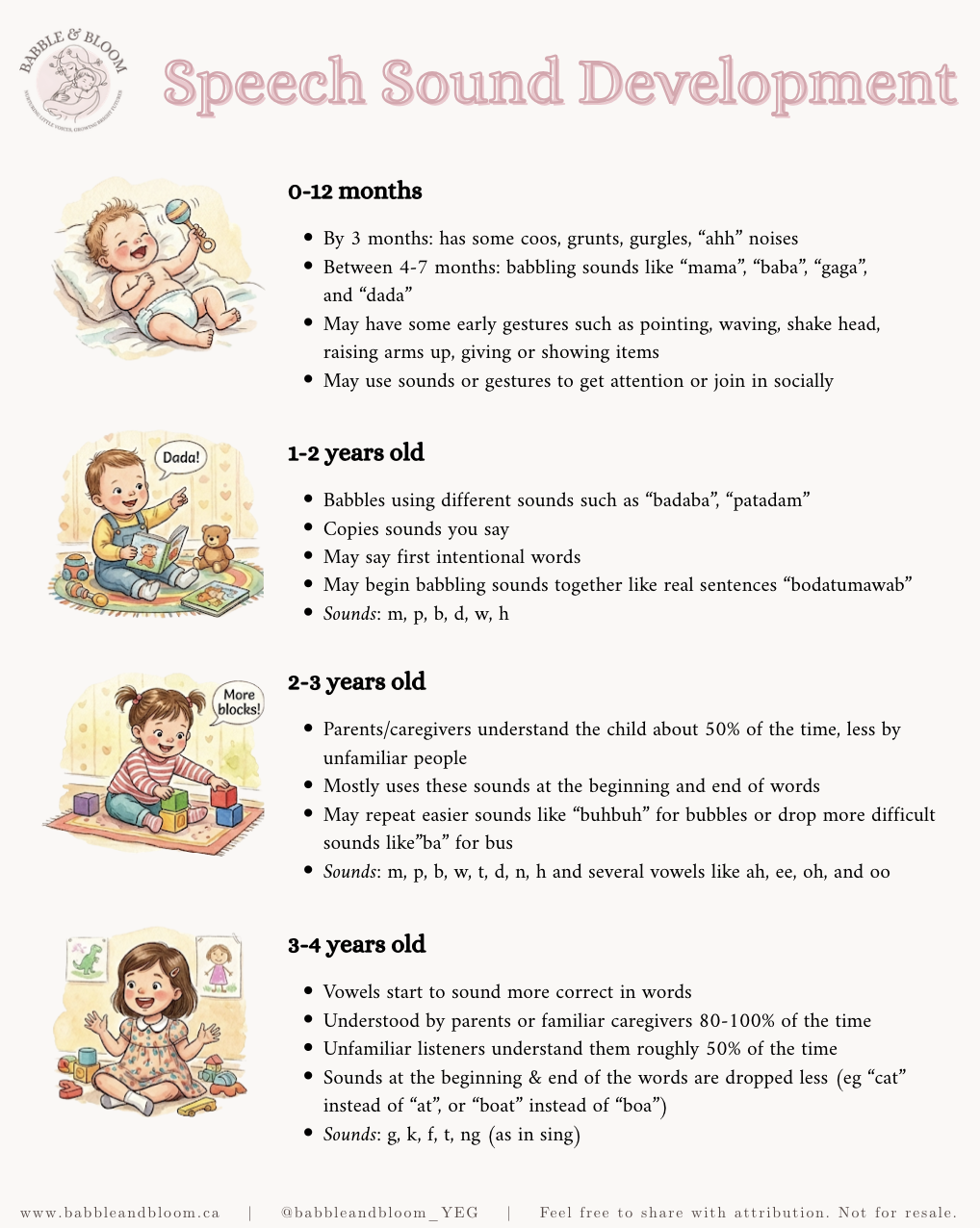
Speech Sound
Milestones
Children learn speech sounds at different rates, but there are patterns we can follow. This chart gives an overview of typical speech sound development so you can feel more confident knowing what to watch for and when to seek support.
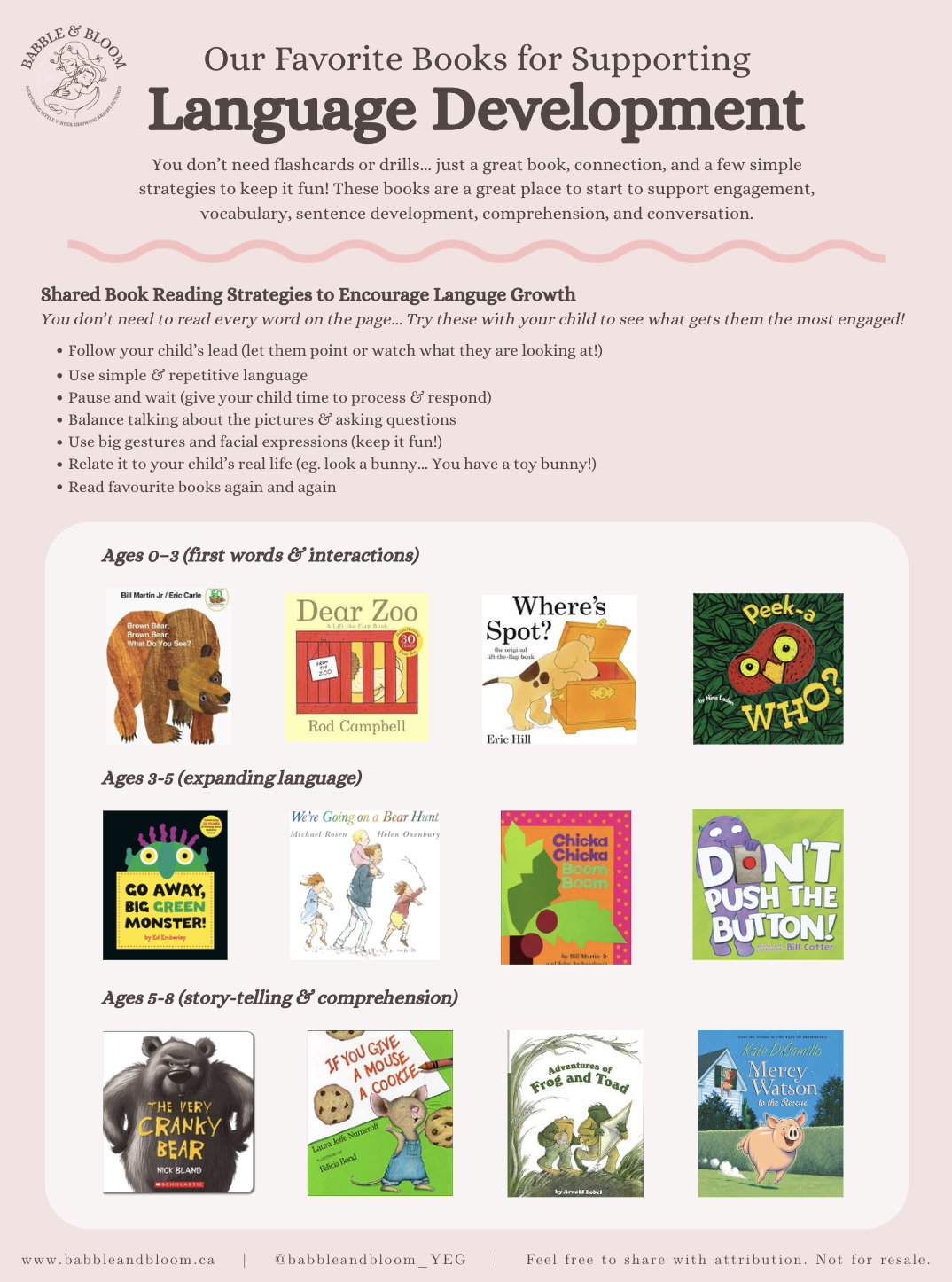
Favorite Books for
Language Development
A go-to list of our favorite books for building early communication, expanding vocabulary, & supporting engagement through everyday reading moments. With simple tips to help you turn story-time into language-rich connection.
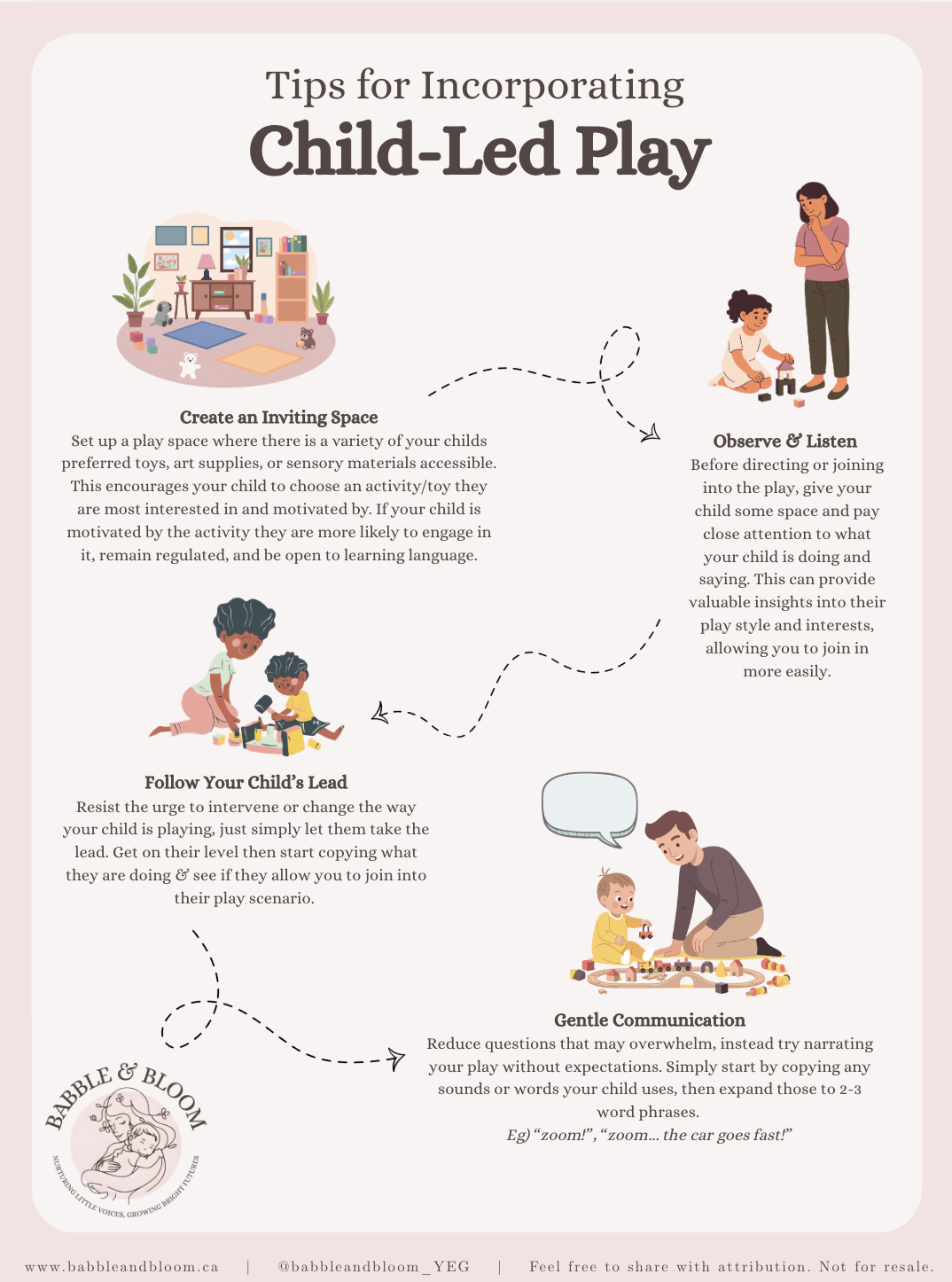
Tips for Incorporating
Child-Led Play
Child-led play is where connection and communication grow. This handout shows you how to slow down, follow your child’s lead, and support development in the moments you’re already sharing.
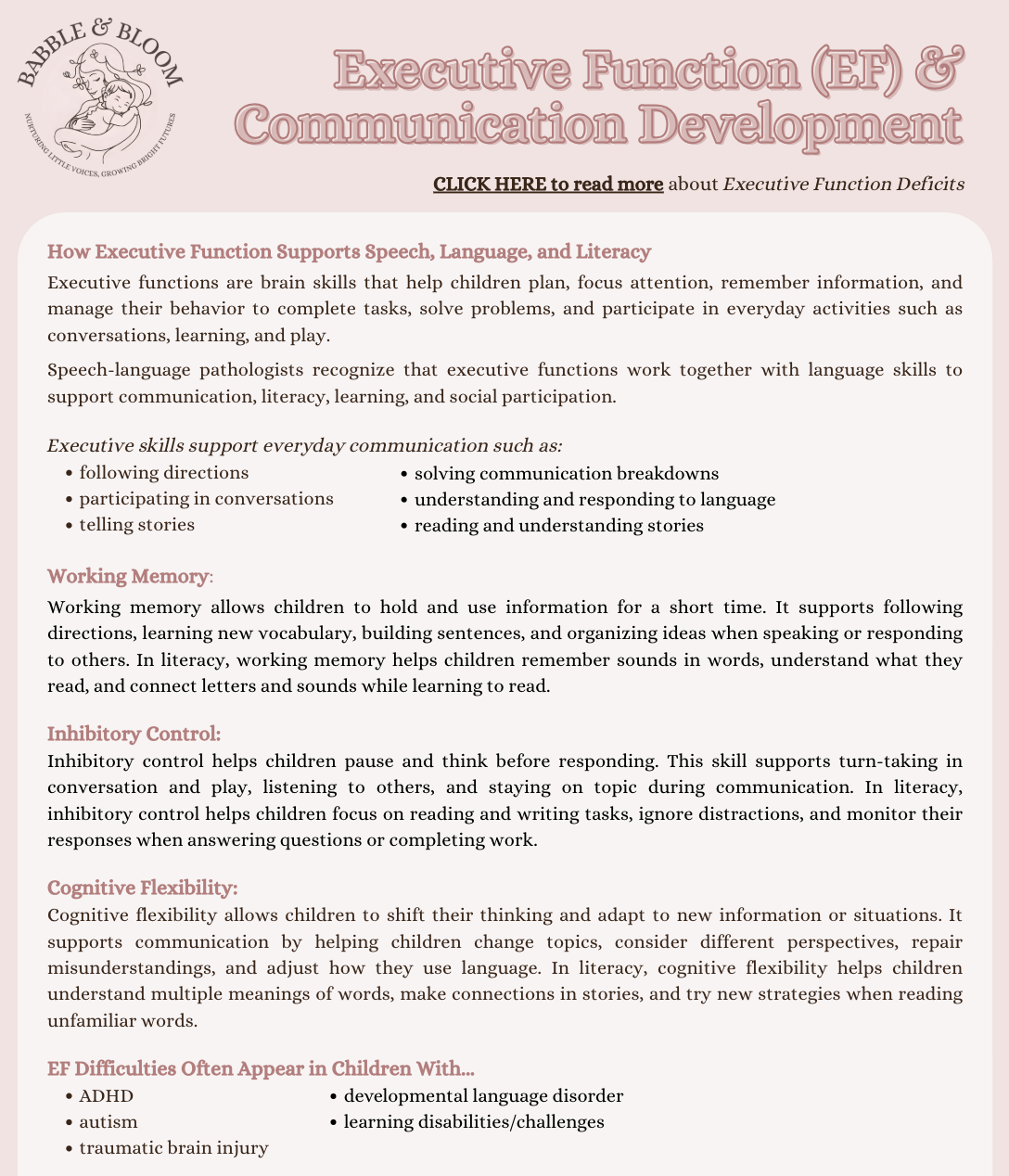
Executive Function & Communication
Learn how executive function skills like working memory, inhibitory control, and cognitive flexibility support children’s speech, language, and literacy development.
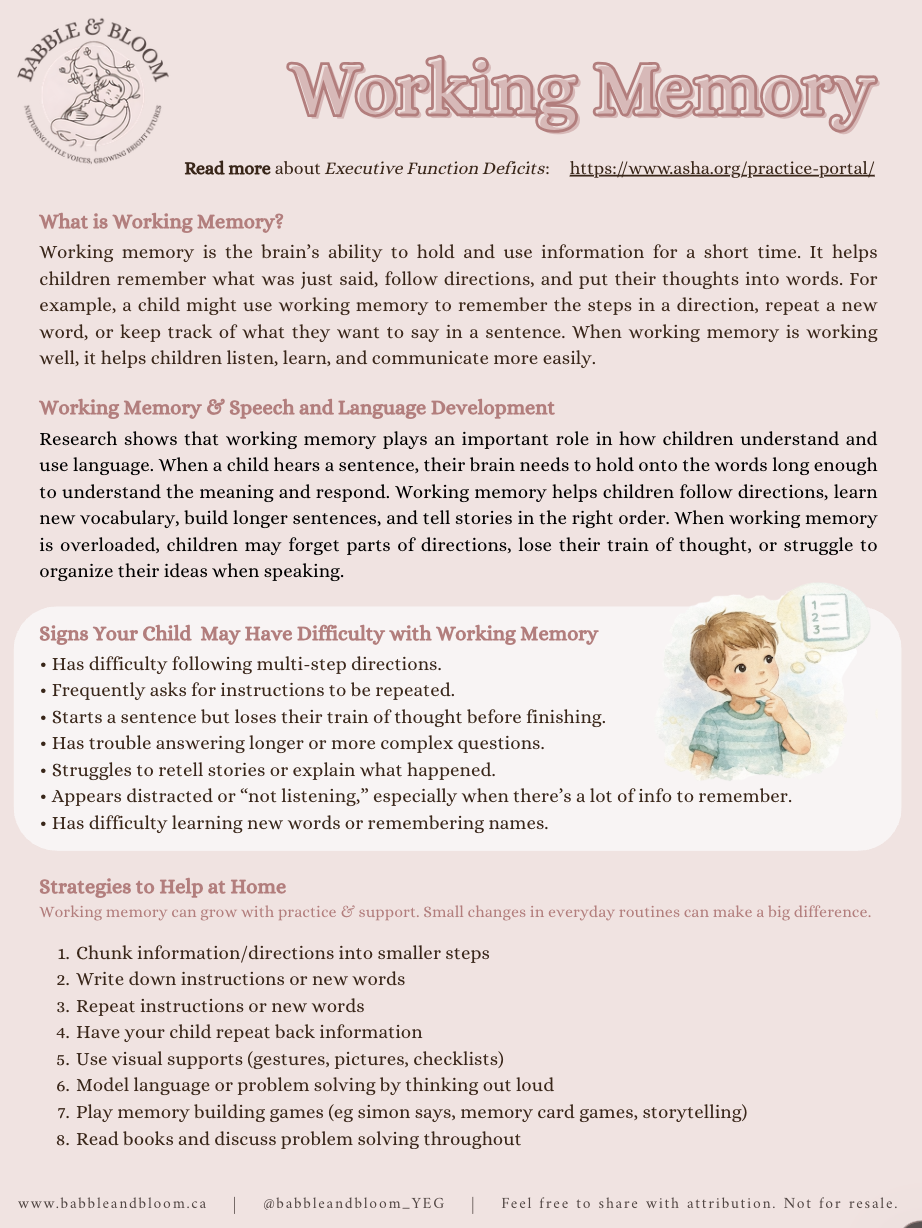
Working Memory & Communication
Working memory helps us hold & use information in our minds, like remembering a sentence or multi-step instructions. Discover simple ways to support your child’s working memory in daily routines & activities at home.
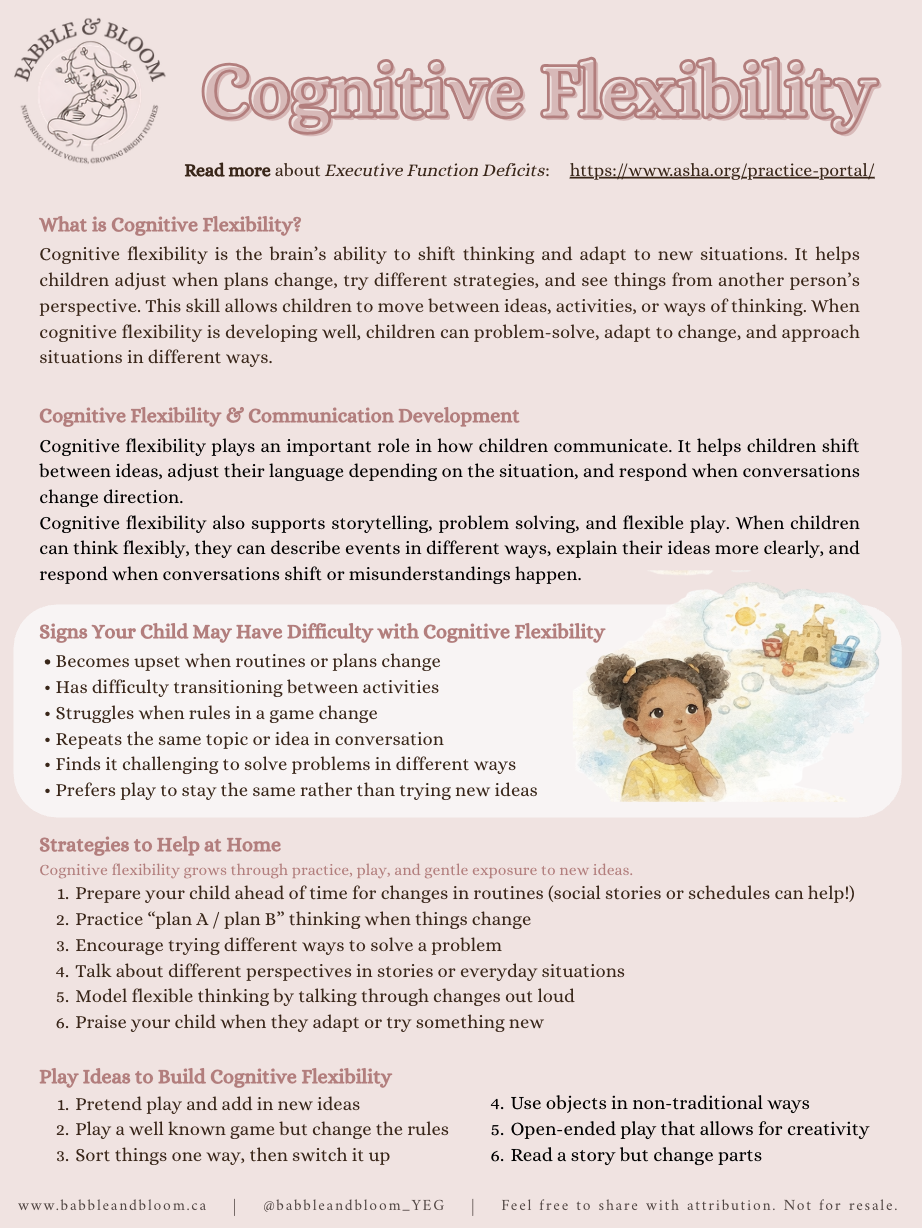
Cognitive Flexibility & Communication
Cognitive flexibility helps us switch between ideas, tasks, or rules, like trying a new strategy when one doesn’t work. Discover simple ways to support your child’s flexible thinking in daily routines and activities at home.
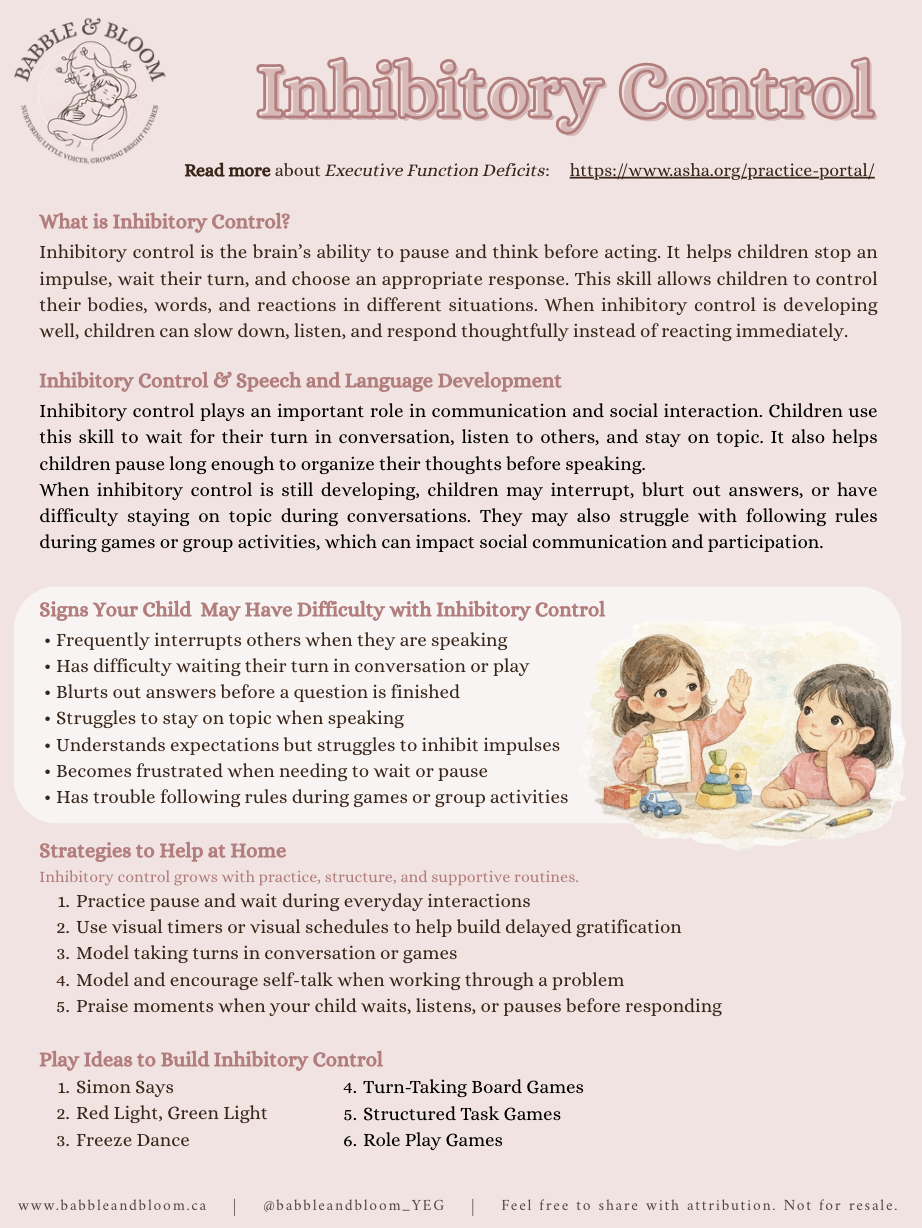
Inhibitory Control & Communication
Inhibitory control helps children pause, think, and resist impulses, like waiting their turn or stopping before speaking. Discover simple ways to support your child’s self-control in daily routines and activities at home.
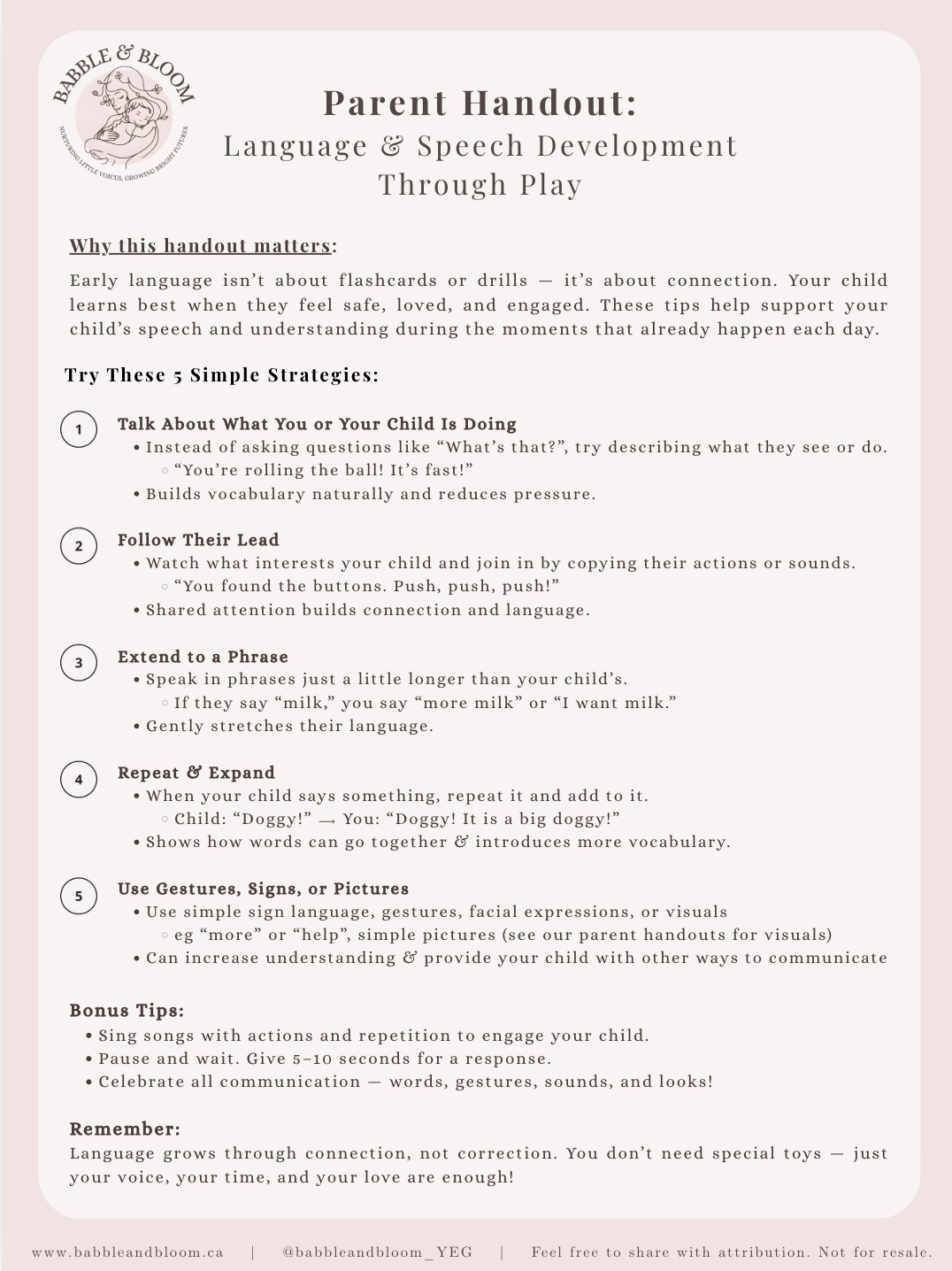
Speech & Language
Development in Play
Early language grows through love and connection, not flashcards. Learn simple ways to build your child’s speech and understanding during play, meals, and routines.
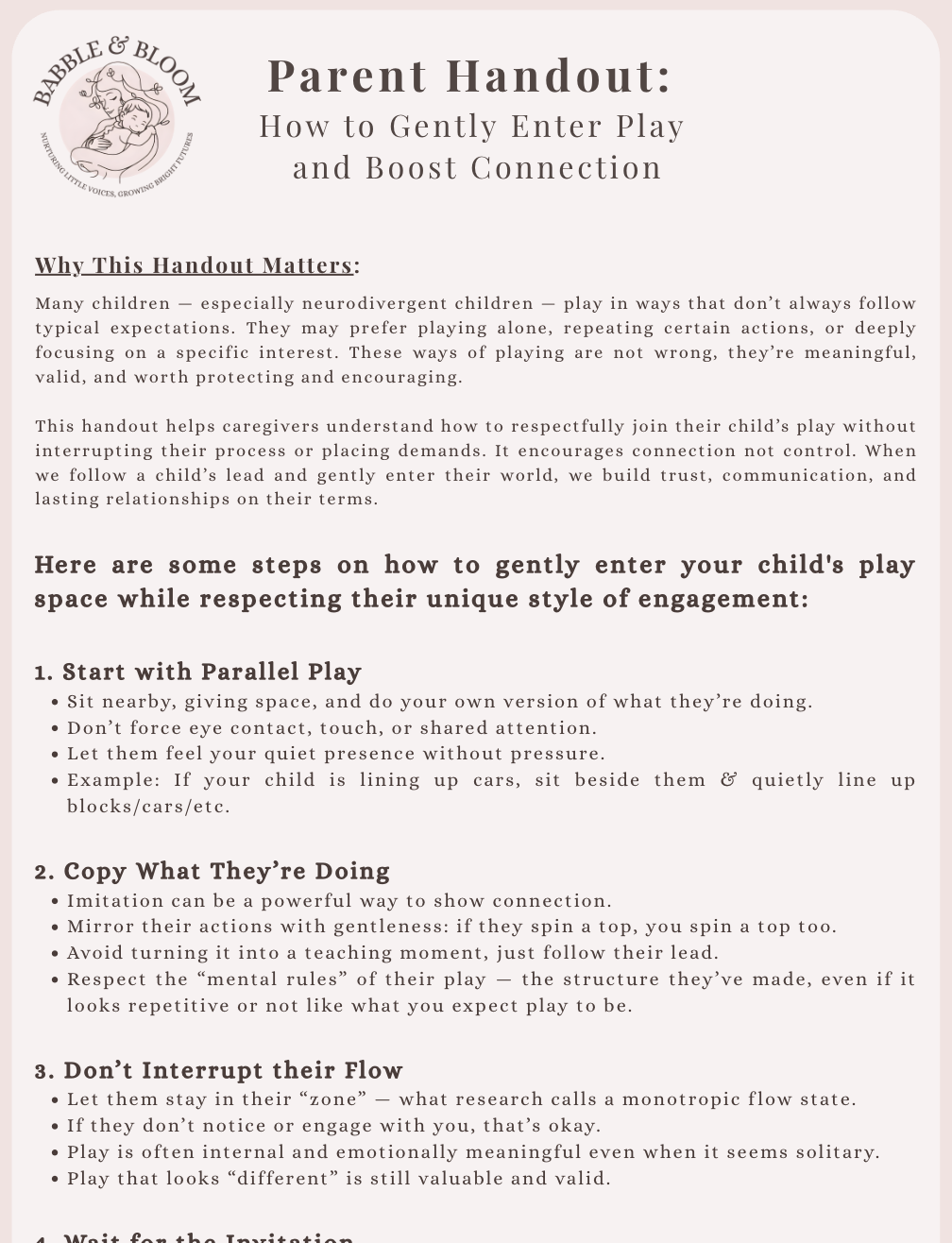
How to Gently Enter Play and Boost Connection
Learn how to respectfully join your child’s play without interrupting their process or placing demands. This guide offers gentle strategies to support connection, communication, & trust.
Behavior Focused Resources
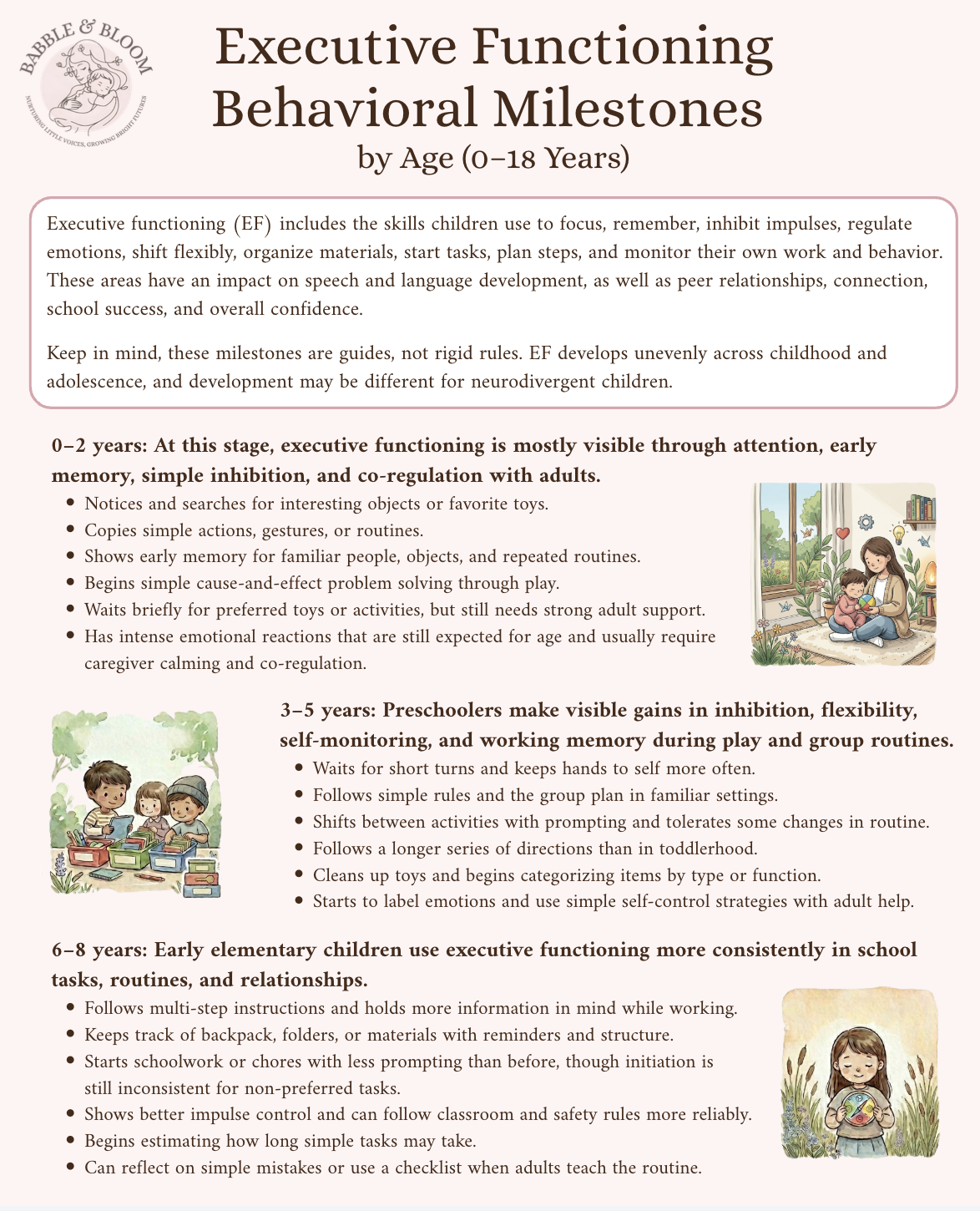
Executive Functioning Milestones
A parent-friendly guide for what to expect across the years in terms of executive functioning development, including what these skills can look like in everyday behavior, and when to seek help.
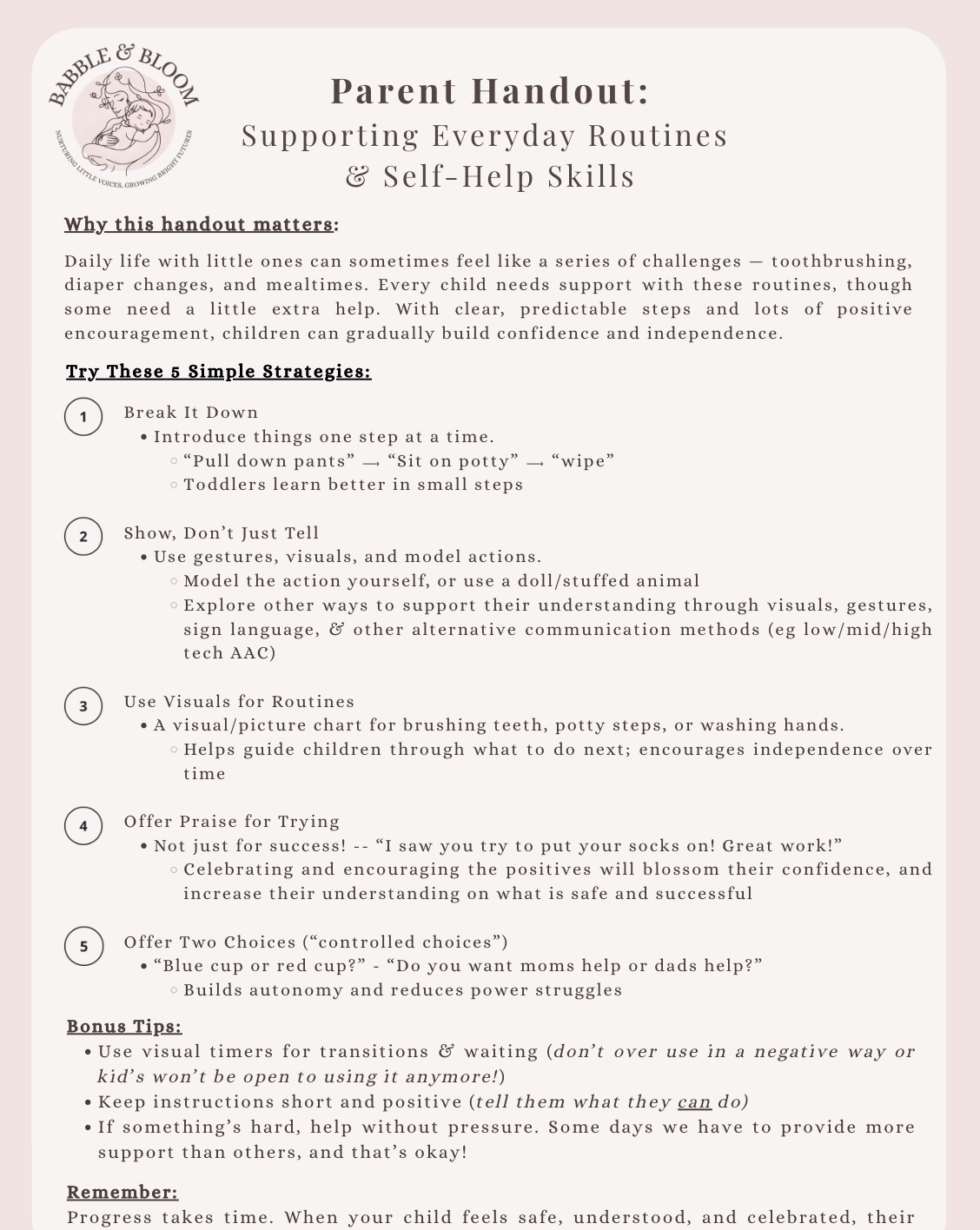
Supporting Everyday Routines & Self-Help Skills
Simple, everyday strategies to help your toddler build independence with routines like brushing teeth, toileting, and getting dressed, especially helpful for our neurodivergent kids.
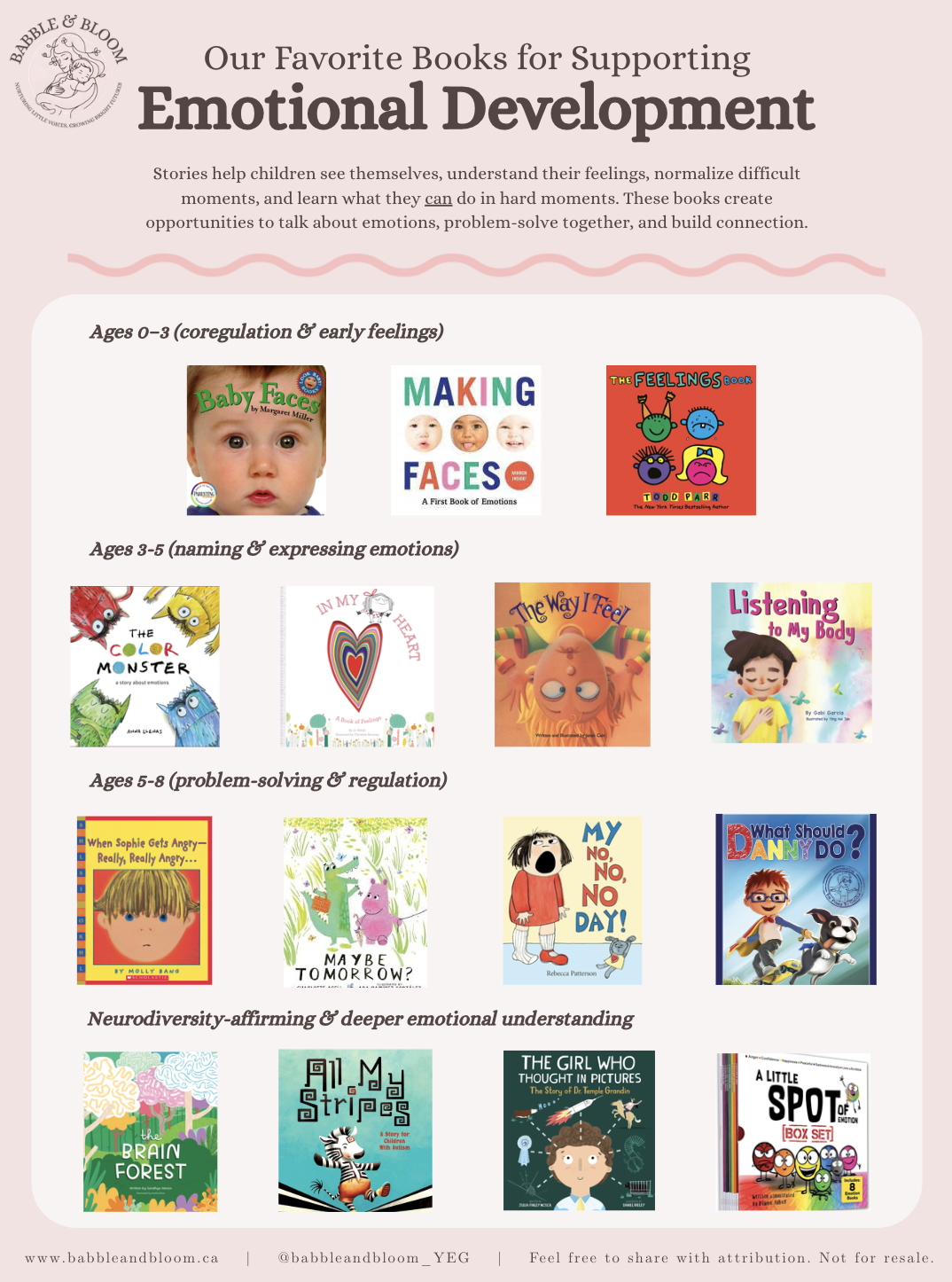
Favorite Books for
Emotional Development
A thoughtfully chosen collection of stories that help children understand feelings, build emotional vocabulary, learn to problem solve and express themselves fully.
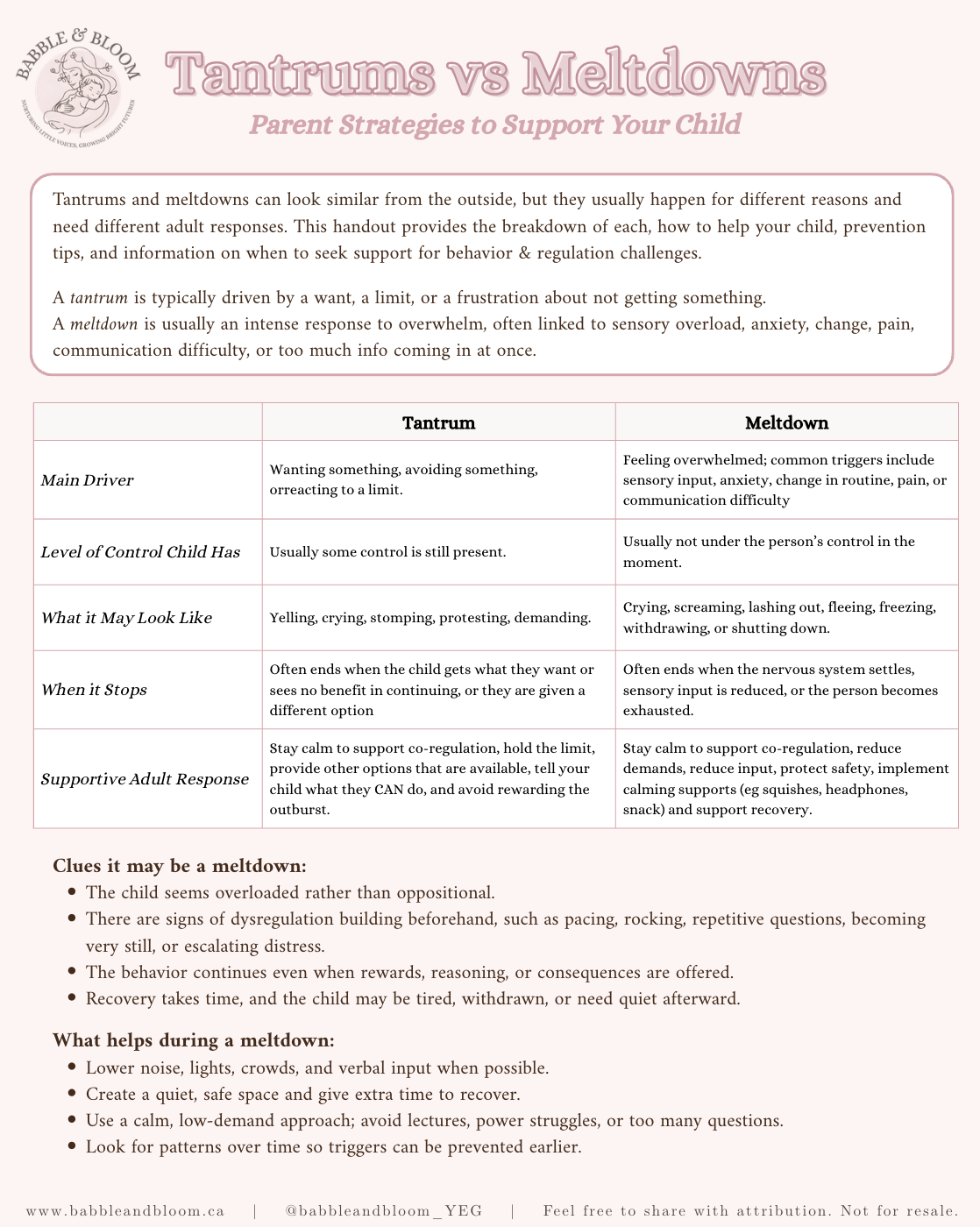
Tantrums vs Meltdowns
Understanding tantrums vs meltdowns helps you respond in ways that support your child’s regulation and communication. This handout explains what each is, why they happen, and when to seek support.
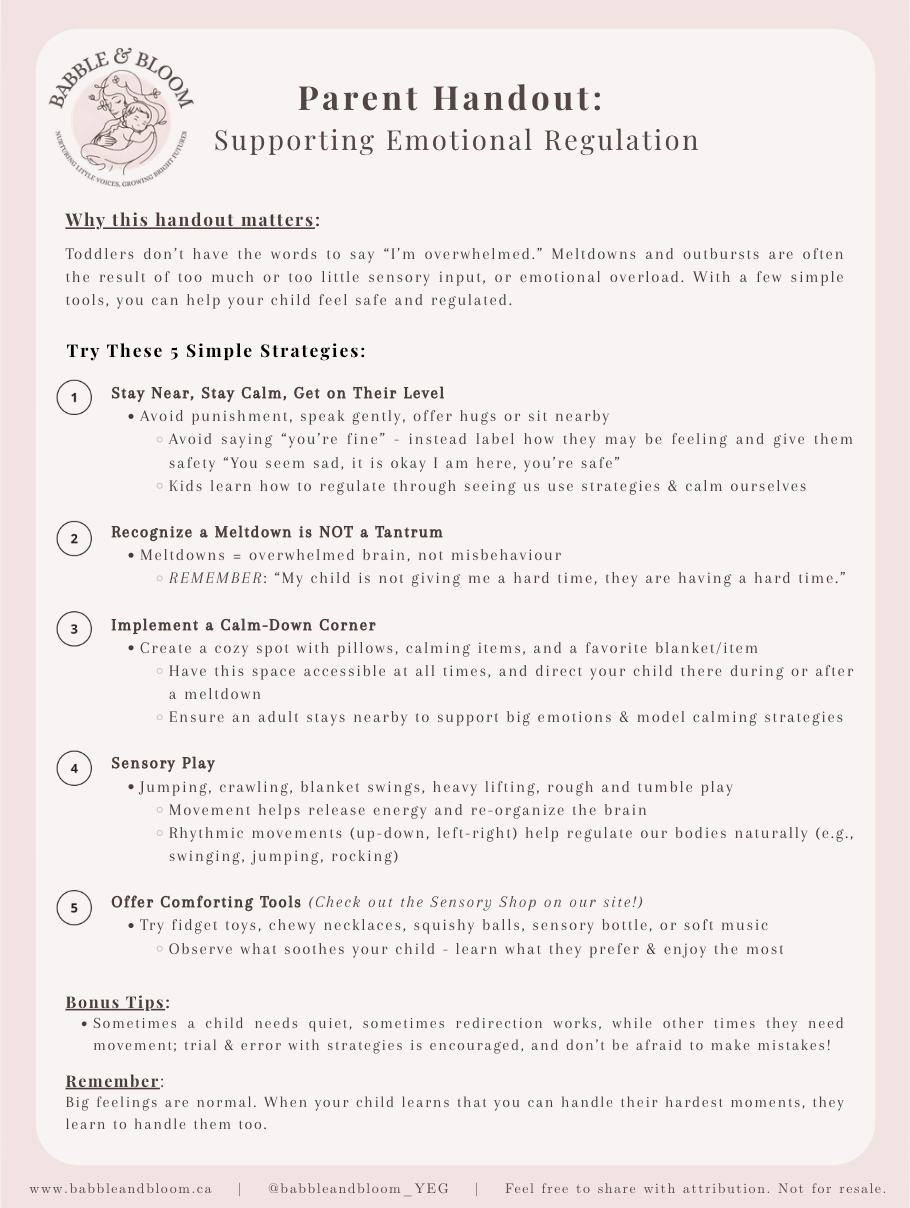
Supporting Emotional Regulation
Meltdowns aren’t misbehavior, they’re signs of overwhelm. This handout gives you strategies on how to co-regulate, create calming routines, and support your child’s unique sensory needs.
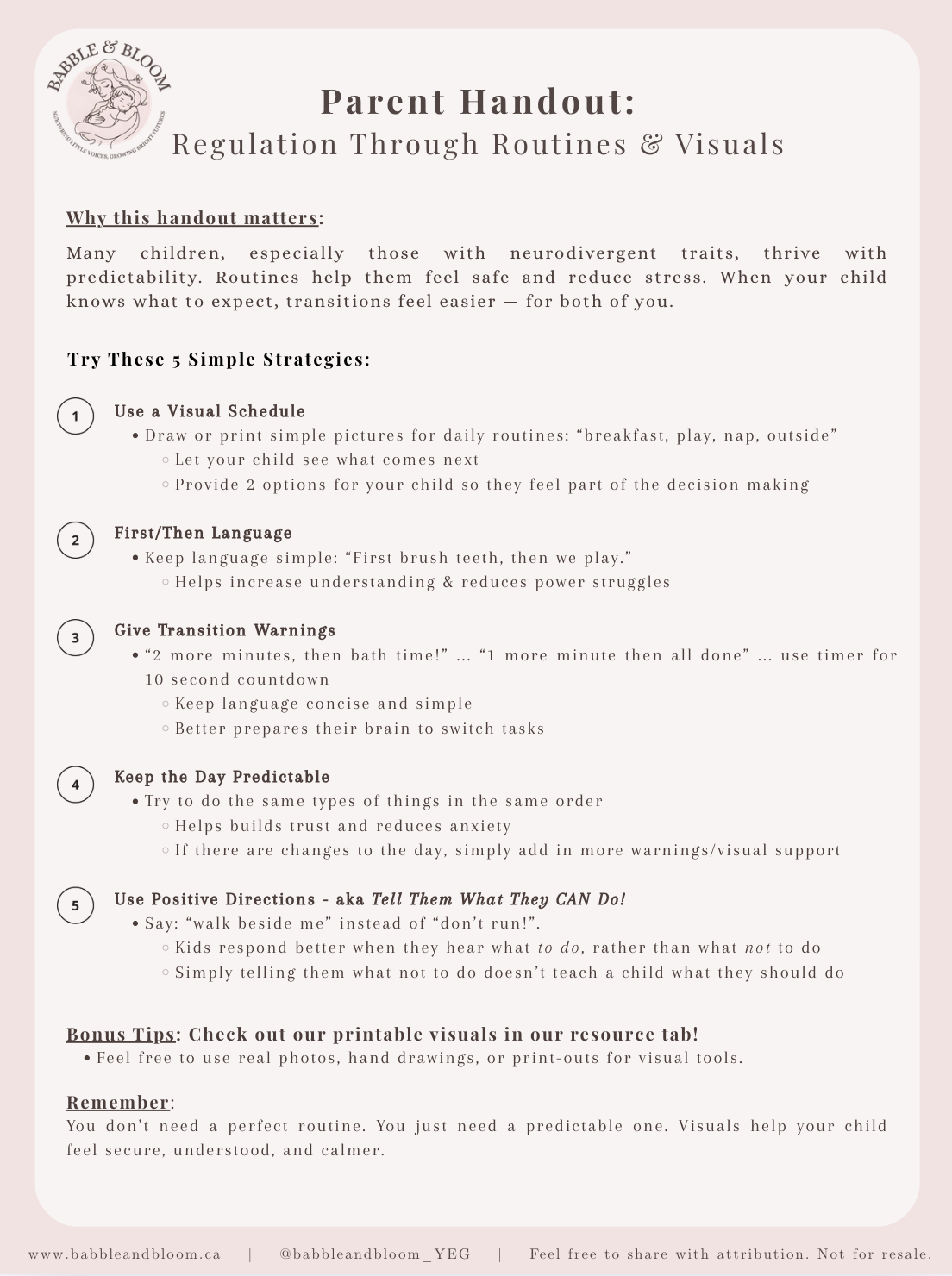
Regulation Through
Routines & Visuals
Visuals and predictable routines can reduce stress and help children thrive. This handout shares ways to build calm and communication into everyday moments & routines. Check out our ‘Visuals’ section below for printables.
Neurodiversity Focused Resources
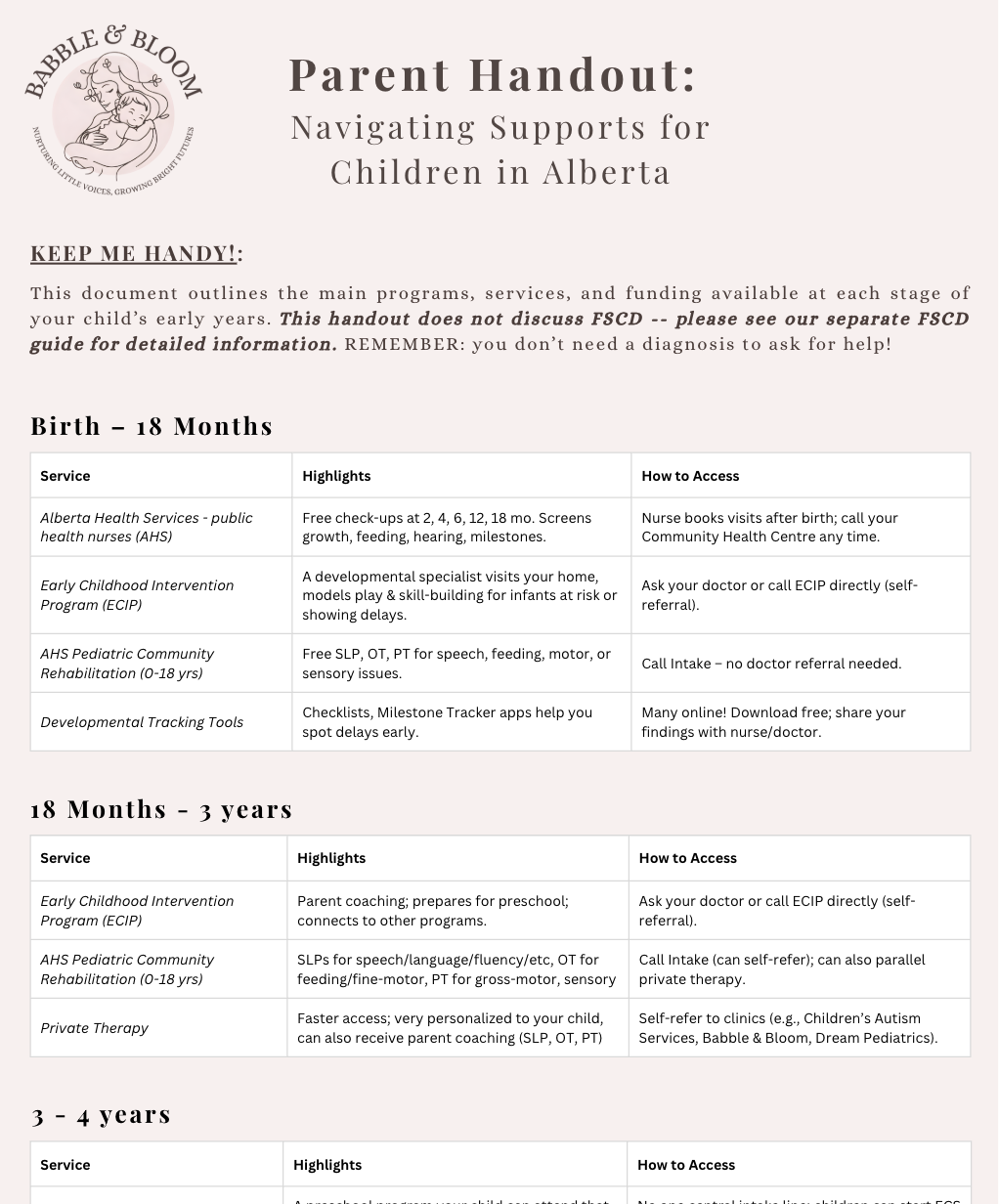
Navigating Supports for
Children in Alberta
A clear, step-by-step guide to services, funding, and programs for children needing additional support in Alberta — from birth to school-age. Learn who to call, when to apply, and how to get support early.
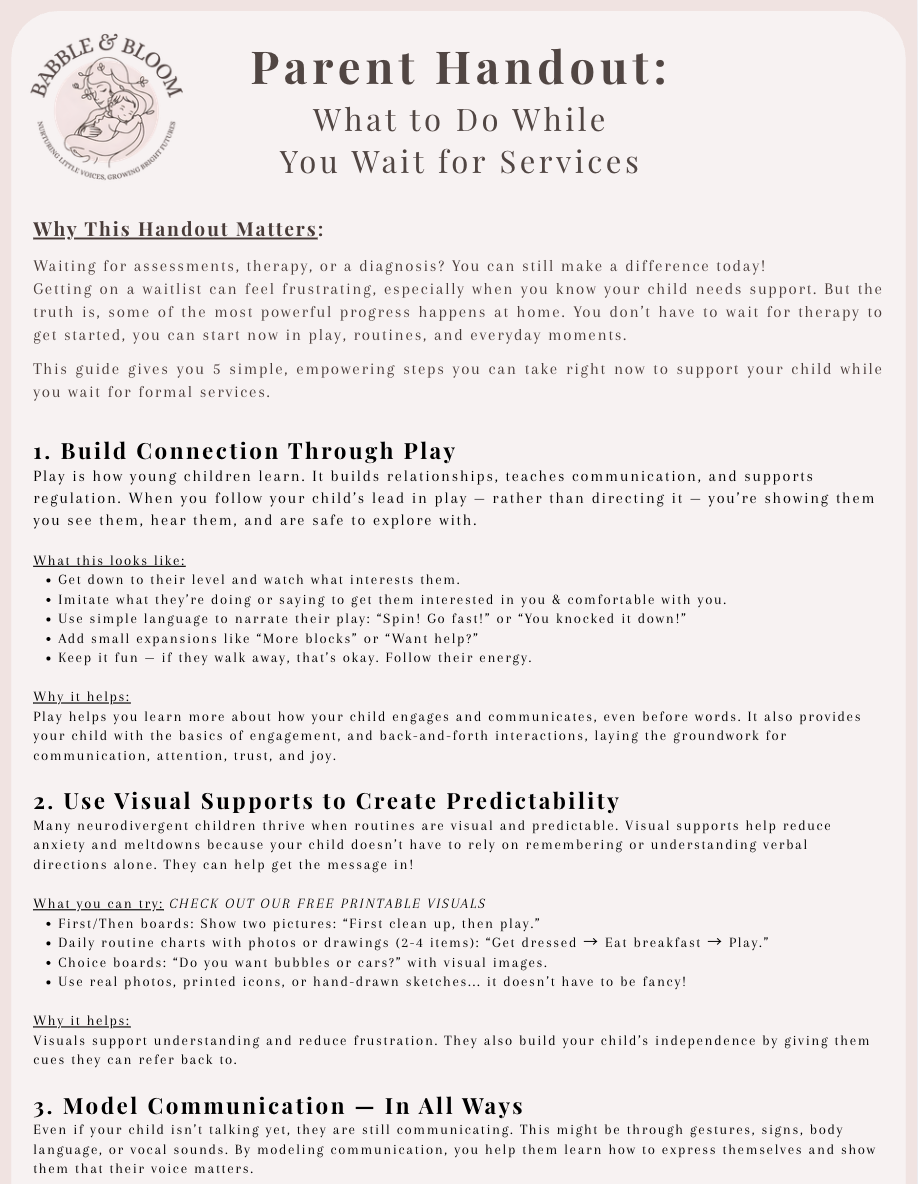
Tips to Support Your Child While You Wait for Services
You don’t have to wait for a diagnosis or therapy to support your child. This handout shares simple steps you can take right now to support your child while you wait for formal services to begin.
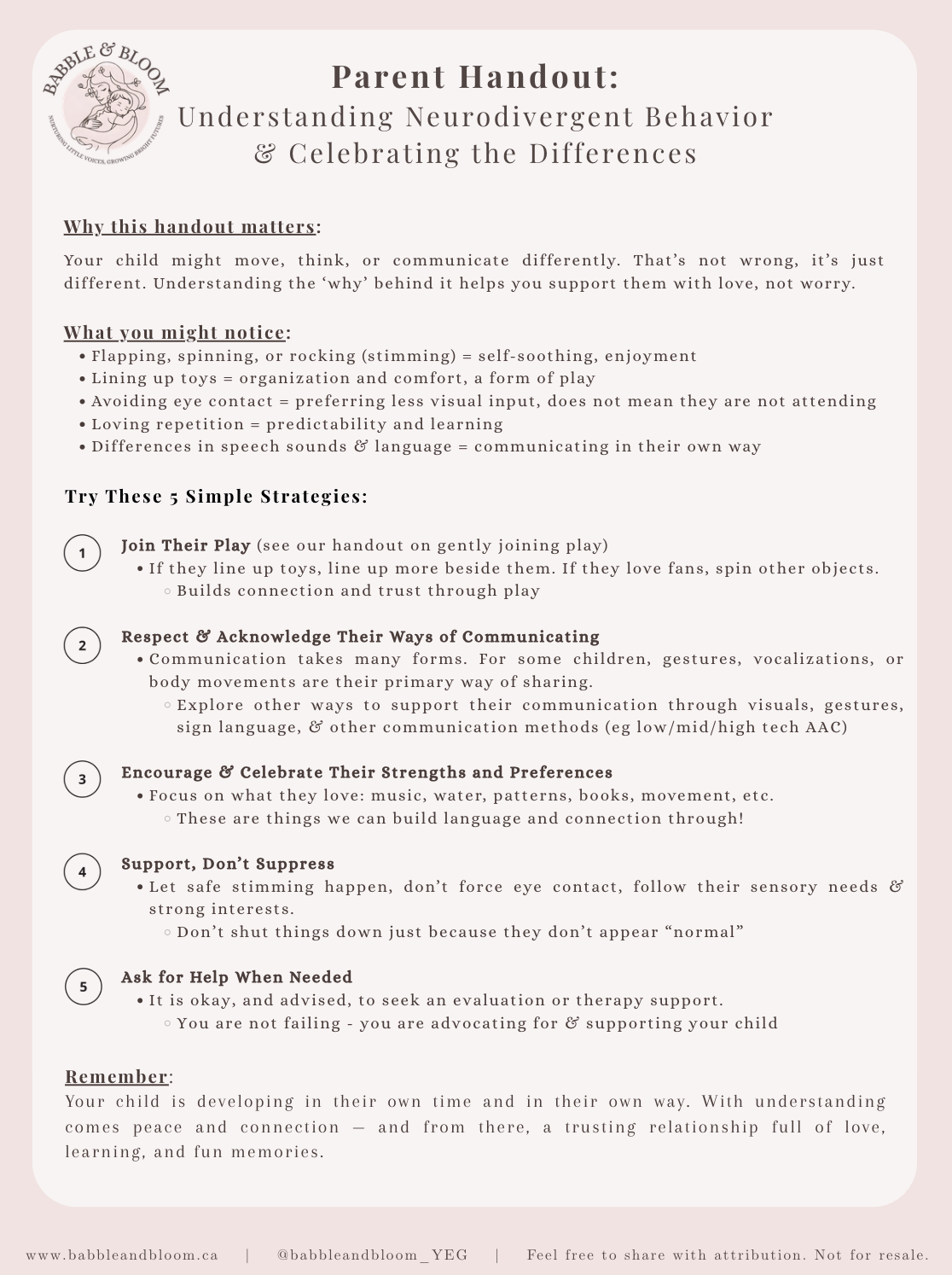
Celebrating Neurodivergent
Differences
This guide helps you see behaviors through a supportive lens. Guiding you to recognize the meaning behind stimming, repetition, or sensory preferences, and how to respond with connection instead of correction.
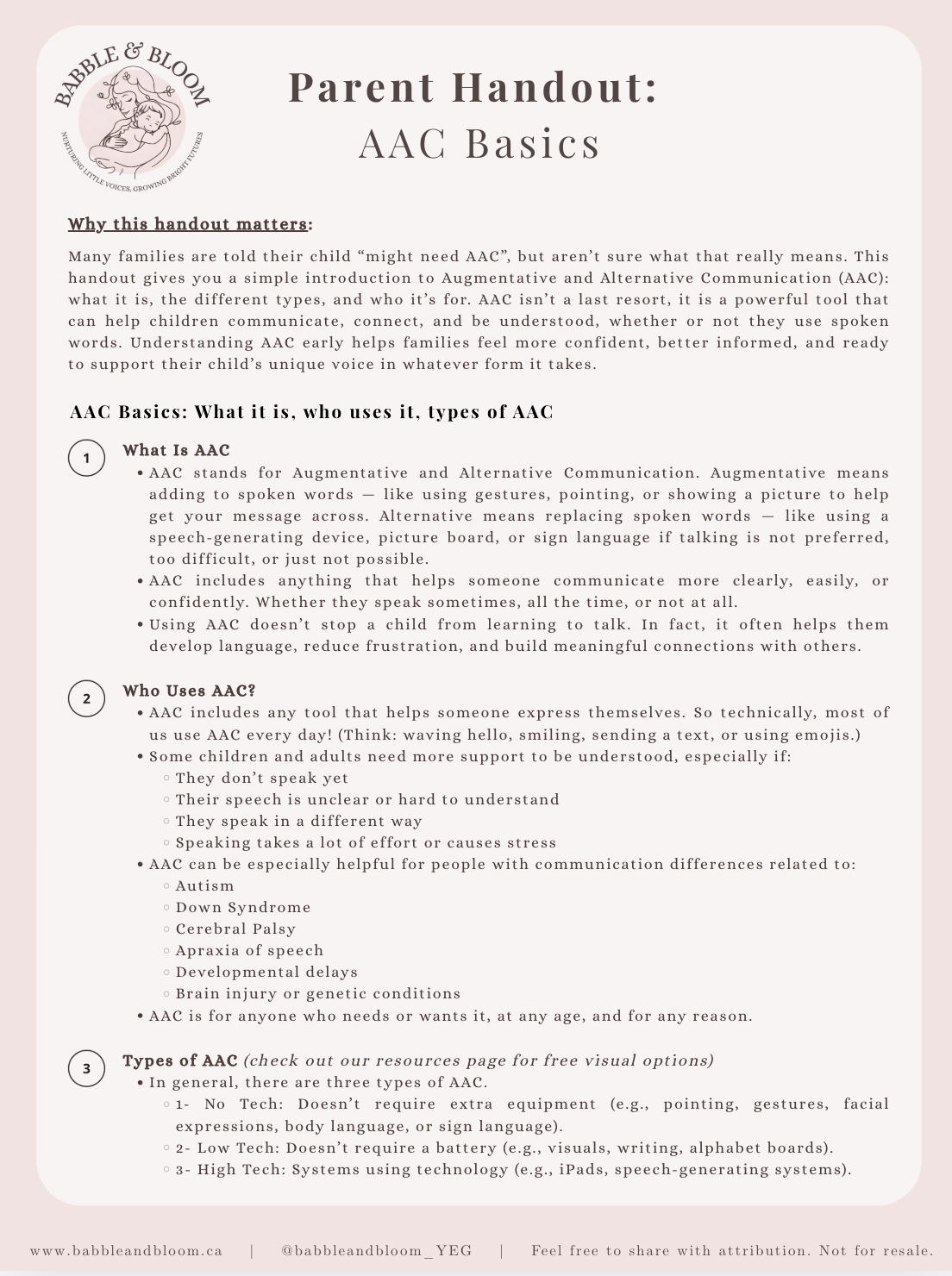
Intro to AAC
Augmentative and Alternative Communication (AAC) can give children a voice and build their confidence. This handout outlines who AAC is for and what it is.
Low to No-Prep Printable Visuals
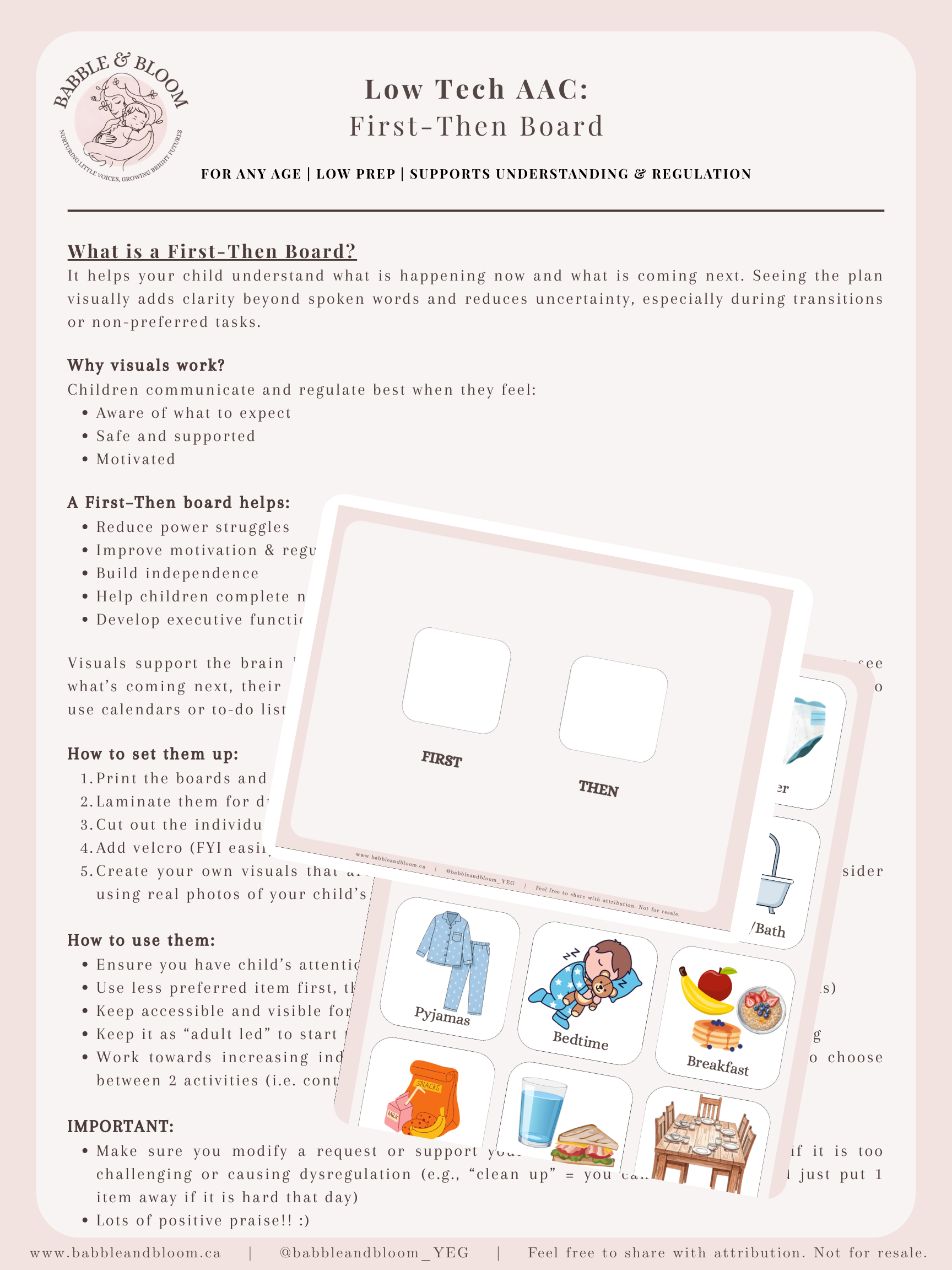
First-Then Board
A clear way to show what’s happening now and what comes next. Helps children feel more secure with transitions, expectations, and follow-through, especially during those more challenging moments.
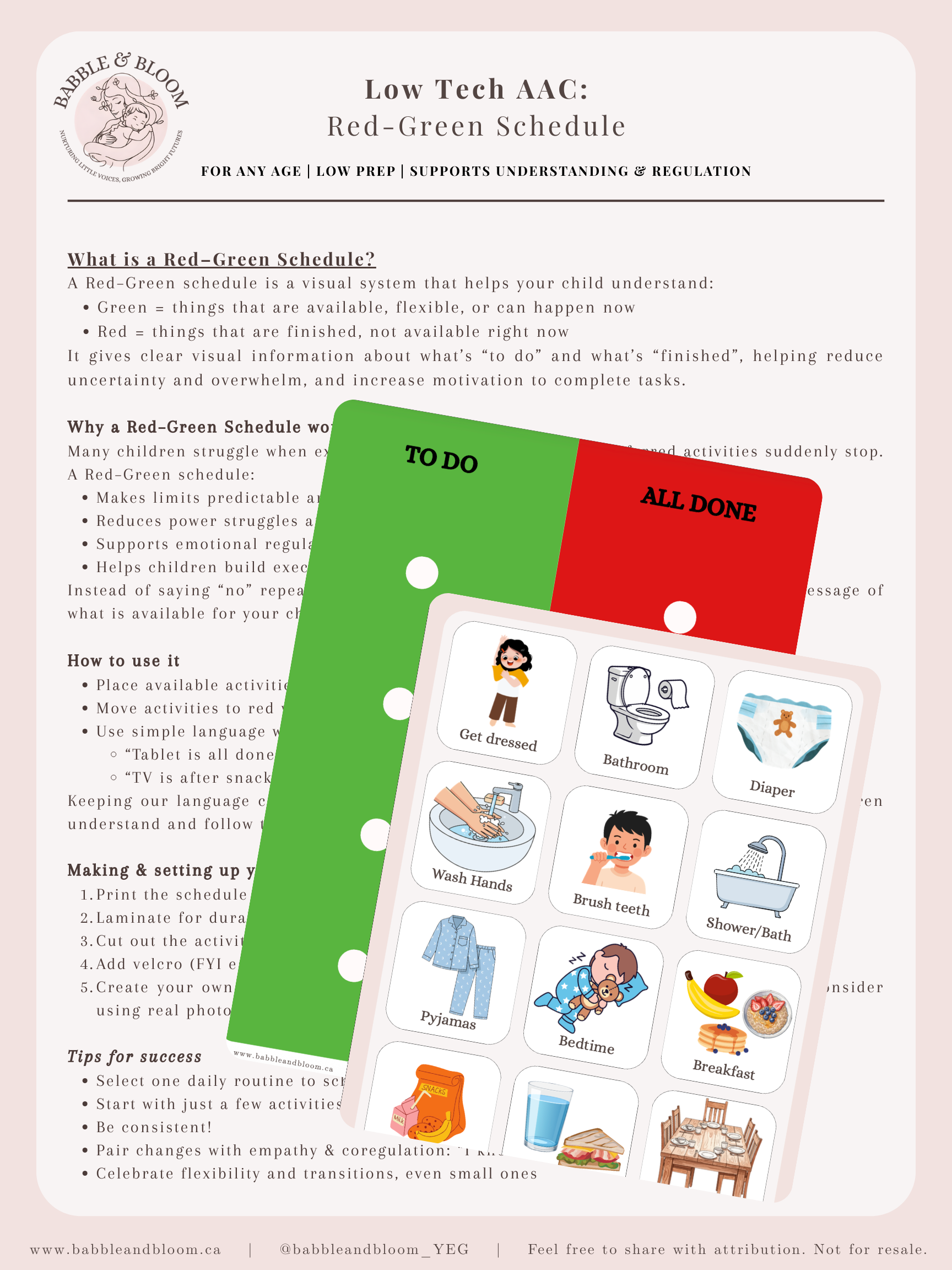
Red-Green Schedule
A simple visual schedule that helps kids see what’s left to do (red) and what’s finished (green), great for making routines clear and motivating!
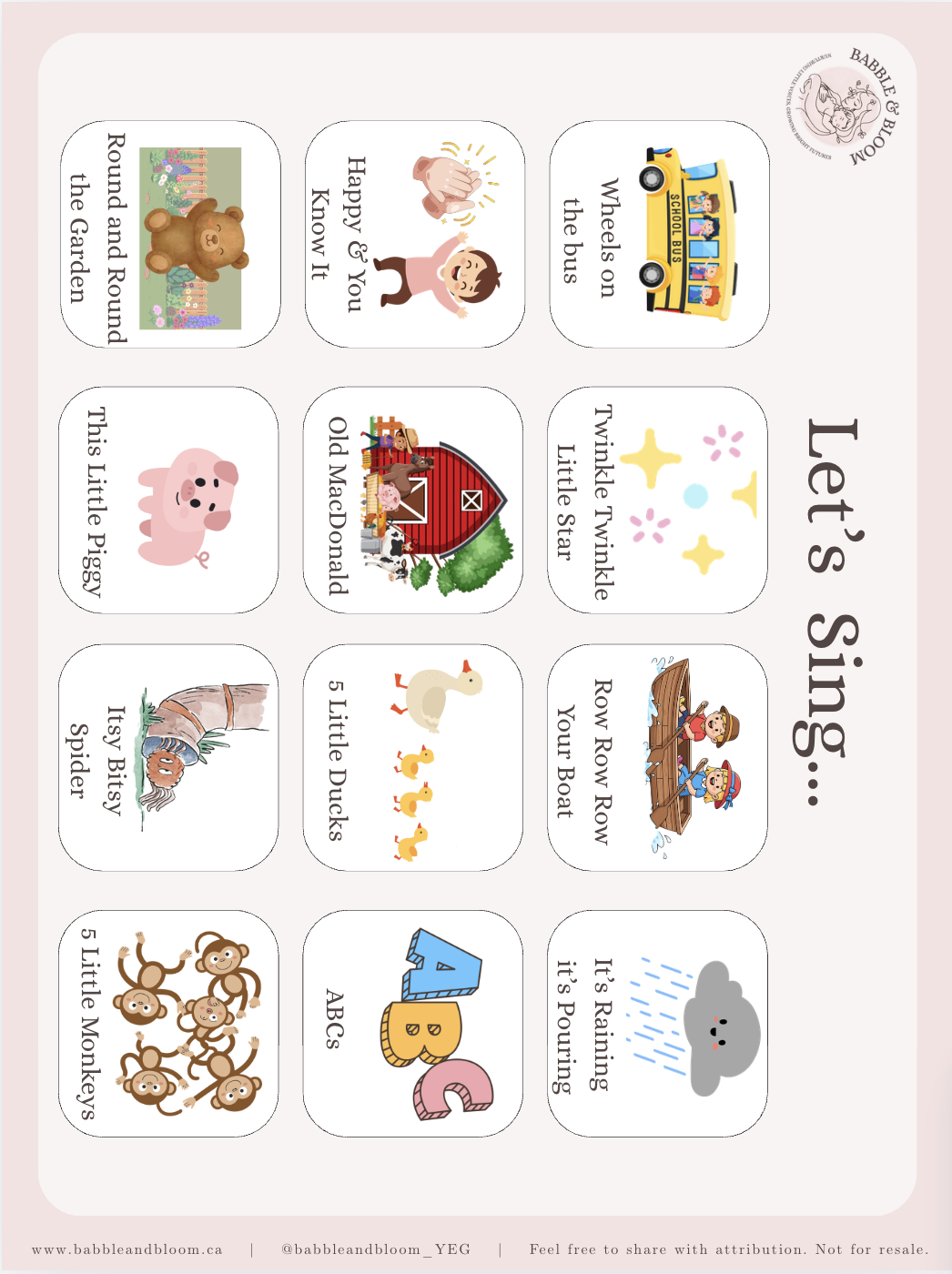
Nursery Rhyme
Choice Board
A visual choice board that lets children pick their favourite nursery rhymes. Supports early communication, choice-making, engagement, and joyful language learning through music.
MORE COMING SOON…
Have an idea or need something you don’t see? Email us at hello@babbleandbloom.ca to request a resource — we’re always wanting to support families as best we can!
* These resources are meant to support and empower families through education. They are not a substitute for individualized assessment or therapy. If you have concerns about your child, connecting with a qualified professional is recommended *

“Children don’t need perfect parents. They need parents who are present.”
- Gabor Mate